
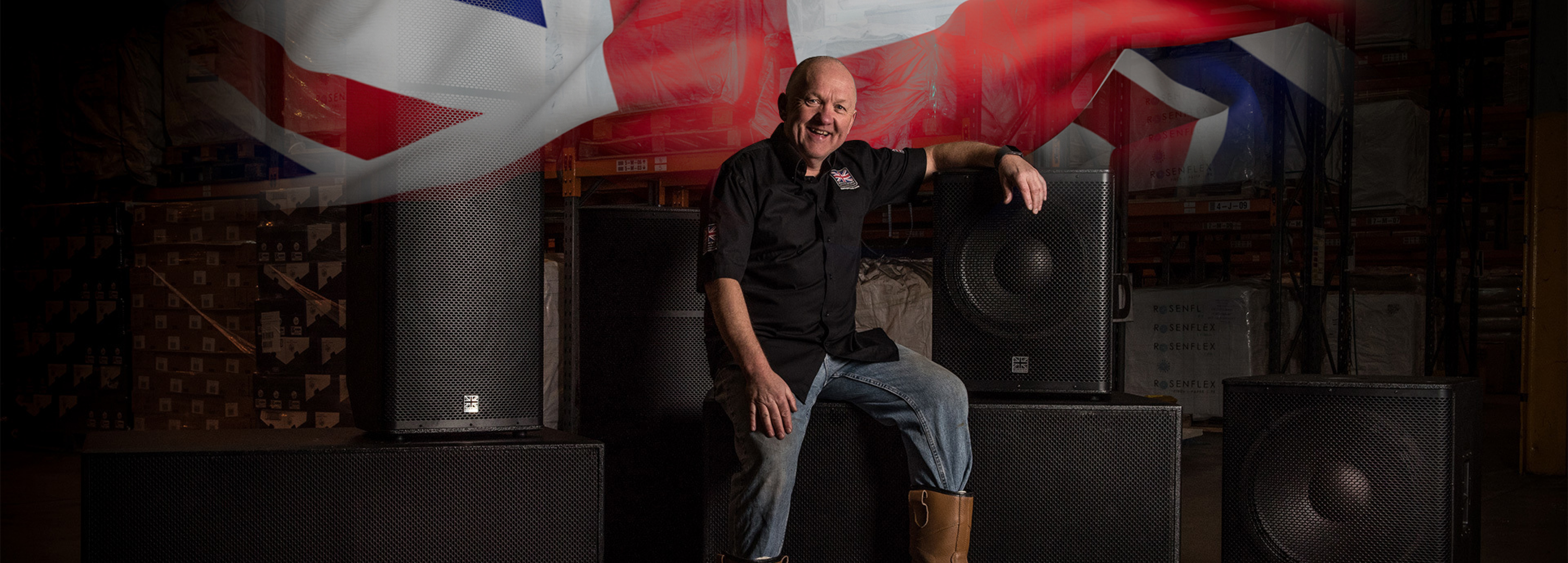
The essence of British sound is heavily focused on the North of England, with Yorkshire front and centre for LF loudspeakers with Gilbert Briggs from Ilkley (1932) and Fane in Batley (1958).
1898–1930s — Prehistory & hi-fi foundations
The moving-coil principle and early loudspeaker experiments set the technical basis for later cone drivers. (global context; UK hi-fi makers later used these principles).
1932 — Wharfedale founded
Gilbert Briggs builds his first loudspeaker in Ilkley; Wharfedale becomes a leading British speaker maker, raising standards for cone and cabinet design that later informed higher-power drivers.
1920s–1950s — Goodmans and early commercial drivers
Goodmans produced drivers used in early PA and domestic speakers. Founded in Leicester, British industry gains mass-production capability for precision driver parts.
1958 — Fane established
Fane begins as a UK transducer maker and later becomes known for high-power cone designs used in guitars, amps, and small PA systems; marks the growth of specialist British driver houses.
1959 — Carlsbro Sound established
Carlsbro used Fane LF transducers exclusively in the early PA speakers and guiter combos. Joint ventures occurred in transducer design and featured under the PowerTone brand, the 50 Top and early 4 x 12 extension cabinets, which pre-dated Marshall. Jim Marshal was a customer of Carlsbro when he had a shop in Denmark Street, London.
1960s — Festival era and system experimentation
Rise of large festivals (e.g., National Jazz & Blues / Marquee promotions) increases demand for high-output systems; UK companies start pairing robust cone drivers with horn loading and large cabinets to reach outdoor audiences.
Late 1960s — Celestion’s pro role
Celestion expands beyond instrument and hi-fi drivers to supply pro cone drivers and horn units that support larger PA rigs; UK transducer influence grows internationally.
1970s — higher power ratings and enclosure engineering
Drivers rated for 100W+ become common; improvements in voice-coil cooling, suspension materials, and cabinet design reduce power compression and increase reliability for touring systems. British driver makers supply many of these components.
1980s–1990s — specialization and system integration
Dedicated subwoofer cabinets and advanced enclosure types are paired with amplification and (later) DSP; UK engineering expertise contributes components and design know-how, though mass production increasingly globalises.
2000s present — measurement, DSP, and niche manufacturers
Modern PA LF design emphasizes measured performance, controlled directivity, and electronic processing. Small UK transducer makers continue to supply specialised drivers.
BishopSound is focused on developing loudspeaker design and cabinet manufacture in the UK and works tirelessly with British Universities and institutions to create new designs and new PA speakers for commercial use.

Share:
Why Refurbishing Your PA Speakers Makes Financial and Environmental Sense
ANDREW BISHOP ACHIEVES CARBON LITERACY CERTIFICATION